
Somewhere Else Entirely
After 'Down In The Streets Below' this Sunday Night Read takes place in a fictional Brussels eight years ago. It's taken from my first and so far only novel: 'The Drawing Board' (Pentagon Press 2022).

He took the Metro from Ste. Catherine to Schuman, and then walked for a minute or so around the corner to the Bus Stop on Rue Archimede.
He walked past the barricades and the barbed wire, and the army trucks, and the soldiers, bored after what was now nearly nine months on the streets, without really noticing any of it.
A banner hung the whole height of the corner of the Berlaymont Building that faced him: 'The Junker Commission. Working For EU' it said in bold italic English, French, Dutch, and twenty-one more languages, all above an enormous European Flag.
It had hung here for as long as Frank could remember, and he had, on more than one occasion, described it to colleagues as looking like something that had been written by a speak your weight machine and art directed by a colour-blind Mexican on acid, wearing gloves.
But that sunny Sunday afternoon in June, he didn't give it either a second glance or a moment's thought. Nor did he notice that the Sunday service of the Number 60 was so infrequent that he had been standing there for almost forty minutes before one finally arrived.
Frank McDonald, whoever he was, was in love with Fiona Anderson whoever she was. And for today that was all that he wished to focus on. The knowledge that it is those who do not know who they are that present the greatest danger would come, but for now it could wait.
He got off the bus at Le Poutre, and navigated his way past the well-groomed children of the well-groomed families taking their long Sunday brunches on the corner terrace of The Toucan Brasserie.
Normally just the sight of these people would have annoyed him intensely, if irrationally. But today was not normal. Today it seemed to cheer him. He caught the eye of a small boy drawing on a napkin and he bid him a cheerful "bon appetit"
He crossed the road to his apartment, took his keys from his pocket, clicked the key fob, and pushed open the heavy wrought iron door to the building. The elevator door closed behind him. He checked his eyes in the mirror. He was not among the undead yet, in fact, this afternoon he felt very much alive, if perhaps a little tired.
Inside the apartment the lights were on. Yesterday, when he had left, though he may have hoped, he had not expected, that he would be out for long.
He placed his phone, his keys and his wallet on the dining table. He took a shower and changed. He lay down on the sofa, placed two pillows behind his head, and turned on the TV.
Aside from the Champions League, The Andrew Marr Show was the only programme that Frank ever watched regularly. The Scottish Premier League was not a service that was provided by any of the so-called service providers available in the building. He had long given up any hope of ever being able to watch any Kilmarnock game anywhere at all.
It was certainly the only programme that he ever recorded. Not on account of any particular lingering interest in British politics, but because he had always liked its host. Andrew Marr was a fellow countryman and a fellow historian, who, although ten years his senior, Frank felt as though he had grown up with. He had what Scots like to describe as a forensic mind, and was, for Frank, at any rate, one of the few remaining people on television who could still be considered to be, in any meaningful sense of the word, a journalist.
He had yet no way of knowing it, but that day, Sunday, June 19th 2016, would mark the start of a week that would come to change everything that Frank knew. Though not quite as much as the woman that he had spent the night with. But these were other things that were yet to come.
Interviewed by Marr, The British Prime Minister, David Cameron, looked relaxed and sounded confident, but this was a man who never looked anything but relaxed and never sounded anything but confident. That was just what he did, and, as it was soon to turn out, that was just about all that he could do.
But there were few that day who would have put their own money on him being gone within the week. And Frank was not among them.
Next was Boris Johnstone, Cameron's Court Jester, and until recently his friend and colleague. He had been grilled by Marr last week, and had rather made a fool of himself, as he was wont to do.
But again, there were few that day who would have put their own money on him succeeding Cameron. And again Frank was not among them. Yet that, and many stranger things, were coming, and coming soon.
Today there was a clip of Boris, he was always Boris and never Johnstone, far less Mr Johnstone, a chummy man of the people name for the chummy, man of the people persona that he had so carefully spun for himself.
He was emerging from a bus, a perennially popular motif of British Politicians, in the car park of some grimly anonymous office park somewhere in the post industrial North East of England. It was a red bus, and painted along its side was the promise that Britain's entire annual EU budget would be used instead to fund The National Health Service, a cherished, indeed a sacred, British institution.
If only, and here's the rub, the country was to vote to leave the EU.
The sum of money was unbelievable. But there were not many that would have bet on that being the outcome of Thursday’s referendum.
He yawned and he stretched, and he adjusted his head on the pillows. At least it would all be over in by the end of the week, he told himself. There had been no need for any of it in the first place, but at least this would settle it now, once and for all.
And so reassured, Frank thought of Fiona, at first sexually, and then romantically, and then briefly maternally, with her son, as he drifted into a deep contented sleep.
He would often nap here for anything between forty-five minutes and a couple of hours. But although it was still light outside, it was four hours later, and gone nine o'clock, before he woke.
He lay for a moment, regaining his bearings, and gathering his thoughts, before he got up. He picked up his phone from the table and connected it to the charger.
There were a hundred and twenty-three unread emails, but most of these were from the last time that he had looked on Friday afternoon. They could wait for another day. Most, in fact, could wait for another week, or another month. And more than a few could, and would, wait for all eternity without any adverse consequence.
There were three WhatsApp messages from his neurotic Spanish neighbour, Pepa. But as none of them concerned mice, nor electricity, nor the gas supply, and were, rather, two enquiries as to his whereabouts, and one vague invitation to supper, he also left them unanswered.
There was no message from Fiona, and so, rather than choose to interrupt her, instead he read her invitation to lunch, and his reply, once again. And that contented him.
He removed the stopper from the already open bottle of Brouilly that stood among its reinforcements on the kitchen sideboard and he poured himself a glass, a large glass. He went to the fridge and took a glass of Petillant. He took both back to the sofa and turned on the TV again.
Michael Palin was trekking in India. It was a programme that he had seen before. And, although he held Michael Palin in almost as high regard as Andrew Marr, India was not a place that had previously much interested him.
His Grandfather, on his mother's side, had served as an army officer there, but Frank had never met him and there was no family history of him that he had ever heard.
Frank had never been there, nor ever really entertained any thought of going. Nor had he shared his Father's enthusiasm for Indian food. But through the lens of love the place now seemed to reveal its beauty and its wisdom to him and he found himself fascinated.
There was a military parade. Marching soldiers spun like dancers. Flags were lowered.
He drank his wine, and he sipped his water, and he lit a cigarette. There were bagpipes playing. He thought of Ayrshire, and Scotland, and his father, and Fiona. He was slightly drunk.
He brushed his teeth, undressed, and went to bed. And, despite the hours he had already slept, he fell quickly back into a deep sleep once more.
And soon, in his dreams, he was in India.
He was watching flags being lowered. There were bagpipes. He was with Michael Palin, only Michael Palin wasn't Michael Palin, he was Fiona.
A message appeared silently on the phone beside his bed: ‘Sweet Dreams, My Scottish Lover … x’ it said.
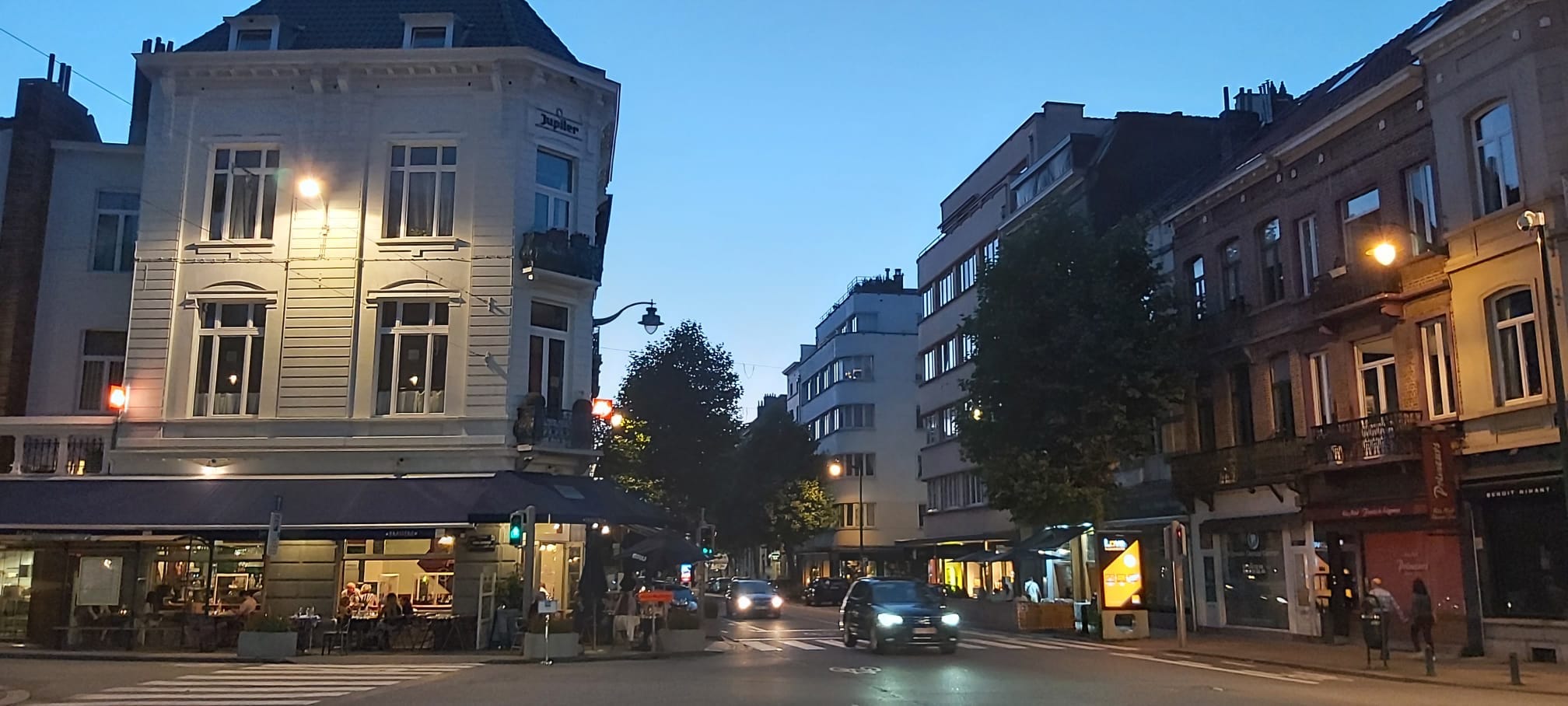
Photo: Fabrizio Nicolucci