
The Shortbread Tin
From 'The Drawing Board'. A Novel By Peter James Russell.

Frank had always told anyone who was prepared to listen, and plenty more who were not, that he considered Ryanair to have done more to implement freedom of movement in the European Union than anyone else.
Without Ryanair, there would be no plumbers from Poznan in Portobello, for sure, and no Vets from Vilnius either. Not that Global Britain would soon be in any need of either.
Frank had a particular admiration for Michael O'Leary, Ryanair's founder and Chief Executive, for the unique way in which he had single-mindedly built his business on price, and price alone.
For how he couldn't care less if anybody liked him, and, in fact, consistently seemed to go out of his way to ensure that they did not. And for the effortless way in which he continually managed to annoy European Commissioners.
Anyway, he was not about to pay Brussels Airlines, the only other option open to him, the same as the price of a ticket to New York, for a biscuit and the convenience of arriving at Zaventem rather than Charleroi.
He had always found Ryanair to be punctual and reliable, just so long as you carefully followed their instructions to the letter. And did exactly what they told you to do, at exactly the time that they told you to do it.
Tomorrow morning, he would walk the five minutes from Harling Drive up Station Hill to catch the train to Glasgow Central. From there he would walk to Killermont Street and take the Express Bus to Edinburgh Airport, for which he had already booked his ticket online. He would be there in plenty of time to check in two hours before his flight.
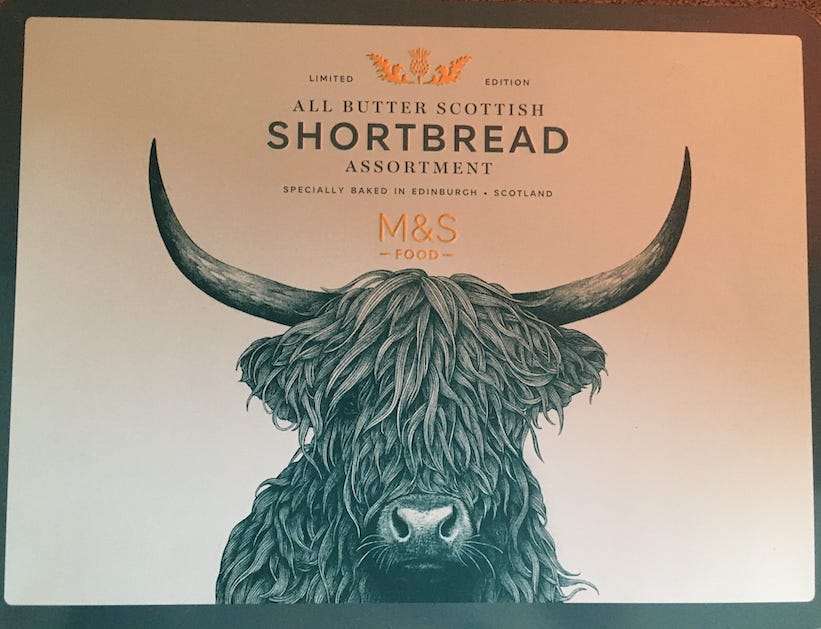
He would pick up some underwear for Fiona, something that she liked him to do when travelling. And a Lego set, possibly an aeroplane, he thought, for Gabriel. And, of course, some shortbread and a tub of miniature Tunnock's Caramel Wafers, which, for some reason, seemed only ever to be available at Edinburgh airport.
He would land at Charleroi at six o'clock, take the bus into Brussels and get off at the stop on the corner of Chaussee de Waterloo and Avenue Lepoutre.
He would be back in the apartment on Rue Tenbosch before eight, all being well.
As he packed his holdall, Frank found that he was not only looking forward to being home, and being with Fiona but also, unusually, that he was looking forward to the journey itself. He folded his suit and his shirt, and he placed them in his holdall.
And then he went in search of a bag to carry those of the drawings that he had selected to take back home with him. The rest he would leave next door with Tom and Catherine for now. He was in no hurry to come to any decision about what to do with the rest of the contents of the house.
Nor for that matter, what to do with the house itself.
He opened the double wardrobe in Bill's bedroom. On the floor, at the front, besides three pairs of spiked golf shoes, was what he was looking for. A blue, leather, vintage Slazenger Golf kitbag with two long shoulder straps. The sort of thing Frank would have chosen for himself, he thought, had he ever found himself in need of a kitbag.
As he lifted it by one of the straps, the other caught on something beneath. He crouched down and released it from the door handle of a small grey metal box that was sitting unseen beneath it.
It was a safe, of the kind more usually found in hotel bedrooms, and so although Frank was a little puzzled at first to find it here in his father's wardrobe, he was not at all surprised to find that, when he entered the six digits of Bill's date of birth on its keypad, it opened.
Inside was a shortbread tin, a large shortbread tin, but nothing else. From the weight of it in his hand, Frank assumed at first that it was empty. But it was not.
He sat down on his father's bed. And once he had discarded the scorecards signed by Bill, Tom, Ian, and Doctor Livingstone, and others whose names he did not recognise, he began to count the banknotes.
There was the odd hundred, but most were fifties and twenties, so it took him a while, but when he had finished, he had counted out eight thousand pounds, or a little short of ten thousand euro. He took two hundred, that would cover the shopping, and save him the trouble of finding a cashpoint tomorrow. He put the rest back in the tin and then folded the tin carefully into the clothes in his holdall.
And so Sunday dawned, and all went according to Frank's plan.
He removed his shoes, his belt, his watch and his jacket, and placed his phone, his wallet, his cigarettes and his lighter, and his passport and his boarding card in the tray, just exactly as the animated instructions on the screen demanded.
But as his stockinged feet stepped through the metal detector, he felt the unfamiliar touch of authority on his shoulder. "Is this your bag, sir? And did you pack it yourself?" The words were spoken by a man maybe ten or fifteen years younger than Frank. He wore a cheap suit. He reminded Frank of someone, but, for the moment, he could not think exactly who.
The man seemed inexplicably pleased with himself, pleased to have something to do, and pleased to have someone, anyone, to tell that he was not from airport security, but HM Customs And Excise. The concealment, as he put it, of a large amount of cash in Frank's hand baggage was unusual, would Frank not agree? Though it was not, itself, necessarily an offence.
He would like to know nonetheless where the money had come from, why Frank was taking it to Belgium, and what he intended to do with it there. Frank told him about his father's death, and he offered his condolences, both personally and on behalf of HM Customs And Excise.
Frank told him that he believed it to be the proceeds of bets made between his father and his golfing friends over many years. He explained that he had discovered it only yesterday, a Saturday and that today being a Sunday, he had had no opportunity to deposit it in the bank before he had to return to work in Brussels.
The man poked about in Frank's holdall. He opened his shopping bags and examined Fiona's underwear, Gabriel's Lego, and the shortbread and Caramel Wafers without comment.
After what seemed to Frank to be an unnecessary length of time, he finally said: "In that case, I think I can let you be on your way, but perhaps in future, it would be better if you were to try and avoid any suspicion of money laundering".
"Money laundering" Frank repeated. "Yes, you'd be surprised how much of it goes on under such seemingly plausible excuses, a little here, a little there, it all adds up". Frank said nothing. "The maximum amount of currency that may be legally taken into, or out of, the European Union, by the way, is ten thousand Euro."
He seemed to spit the words 'European Union' but perhaps that was just Frank's imagination.
Were these people born passive-aggressive, he wondered, or was it something that they were trained in? Renaud, yes, that was it, he reminded him of Renaud. "Have a nice flight, sir.”
If bags full of cash were such a concern then why didn't HM Customs And Excise spend more time poking about in the hand baggage of hedge fund managers coming back from Luxembourg or Zurich? Or football agents, for that matter.
His flight was called, and he boarded. He stowed his holdall in the rack. He took his extra legroom seat, and he fastened his seat belt.
He bought a ham and tomato sandwich, two miniatures of Famous Grouse, and a bottle of Highland Spring Water from the Slovakian steward.
Politely declining the offer of a lottery scratch card
.